by Harry Freedman

The People Who Do Not Eat the Sinew

Zhao Ying-Cheng and the Jews of 17th century Kaifeng

The People Who Do Not Eat the Sinew 1 Uncategorized

In June 1605 Matteo Ricci received a visitor at his home in Beijing. Ricci, who was a Jesuit missionary sent to convert the Chinese, had been looking forward to this visit. He had heard that although the visitor was Chinese, they worshipped the same God.

When the visitor arrived, Ricci took him into his chapel and kneeled down before a painting of the Madonna with Child and John the Baptist. The visitor, puzzled, did the same. “In our religion we do not kneel before pictures of Rebecca, Jacob and Esau” he said. Now it was Ricci’s turn to be puzzled. When the visitor saw a picture of the four Evangelists, he asked why Jacob’s other eight sons had not been included. It wasn’t until the visitor contradicted Ricci, telling him that the Messiah had not yet come, that the missionary realised that he was talking, not to a fellow Christian, but to a Jew. Even so, the visitor, a 60 year old man named Ngai (or, according to some, Ai Tian) did not recognise the word Jew. He called himself an Israelite…..Read more at https://harryfreedman.substack.com/p/the-people-who-do-not-eat-the-sinew

101 Treasures

Angels, Monsters, Contracts, Holy Texts

101 Treasures 2 Uncategorized

I was sent a stunning book last week by the National Library of Israel. Entitled 101 Treasures and produced to celebrate the opening of the Library’s new building, the book is a remarkable production, both for its content and its presentation. Imposing, eye-catching and studded with glossy, full page photographs of 101 items in the Library’s collection, it is the sort of book that you might casually open because it looks interesting and find yourself still browsing half an hour later.

Jewish culture is book-oriented; Jews themselves are sometimes described as the People of the Book. The Book in that phrase is the Bible but our association with the written word runs much deeper than that. I remember as a young child one of my school teachers saying how much she enjoyed going into the homes of her Jewish pupils because they contained many books. I don’t have any statistics to bear this out but it feels as if a disproportionate number of Jews are writers: authors, scriptwriters, content creators etc.

Read more at https://harryfreedman.substack.com/p/101-treasures

Remembering Irving Jacobs

Remembering Irving Jacobs

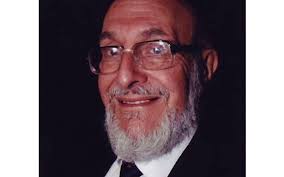
Rabbi Dr Irving Jacobs, who passed away this week, was arguably British Jewry’s most inspirational academic teacher, a man who deserved far greater recognition than he received. His talent lay in a unique blend of easy-going humour, the enthusiasm that he showed for whatever topic he was teaching and an innate sense of how to connect with his students.

Continue reading
The Battle of Ideas Explodes

The Battle of Ideas Explodes

In 1962 Louis Jacobs was out of a job. Two years earlier he had given up his pulpit at the New West End Synagogue to take up a lectureship at Jews’ College. He had been informally advised that he would become College Principal when Rabbi Dr Isidore Epstein retired. When Dr Epstein did retire the Chief Rabbi, Dr Israel Brodie made it clear that he would not promote Jacobs because of his views on the authorship of the Torah, expressed in his book We Have Reason to Believe. Jacobs handed in his resignation to Jews’ College.

Continue reading
The origins of Masorti Judaism in Britian

The origins of Masorti Judaism in Britian

Masorti’s roots in Britain lie in a dispute which split the Jewish community in the early 1960s.  The issue was the refusal of the Chief Rabbi first to appoint Rabbi Dr Louis Jacobs as principal of Jews’ College and subsequently to forbid him to return to his former position as Minister of the New West End Synagogue.

Louis Jacobs was acknowledged as British Jewry’s outstanding scholar, a man with an encyclopaedic command of Talmud, Bible and Halacha. As a young man he had studied in the Gateshead Kollel, where Rabbi Dessler, one of the leading Jewish intellects of the 20th century had described him as an ilui, a Talmudic genius. He had been regarded within the ultra-orthodox community as their brightest hope for the future.  But Louis Jacobs’ interests ranged far wider than the yeshiva world.  He read voraciously and studied continually, with a curiosity that led him to soak up knowledge from wherever he could.

When he enrolled on a course in Semitics at London University he was introduced to the academic study of the Bible. Among other things this approach challenged the traditional belief that the Torah was revealed to Moses on Mount Sinai. Academic scholars believed that the Torah was a composite document written by different authors over a period of time.

Jacobs understood that they had reached this view by using their critical faculties and the analytical tools of modern science. It made sense to him, and it didn’t conflict in any way with his lifestyle as an observant Jew. He still regarded the Torah as sacred and divine, all that had changed in his mind was the method of its transmission to humanity. He rejected the accusation that he did not believe in Torah min ashamayim (Torah from Heaven), arguing that it all depends on what one means by the word ‘from’. He called the book he wrote We Have Reason to Believe, because he was convinced that Judaism was a religion of the mind, which had developed and evolved throughout history as human knowledge advanced.

The Chief Rabbi controversially refused to appoint Jacobs to head up Jews’ College because of his views. When he forbade him from returning to the New West End Synagogue the controversy turned into a full-blown dispute. The vast majority of the members of the New West End resigned and established the New London Synagogue with Louis Jacobs as their rabbi. Gradually new synagogues were established, loosely placing themselves under his banner. Eventually these synagogues joined together into the Assembly of Masorti Synagogues.

Louis Jacobs was always regarded as the religious inspiration behind Masorti although he was somewhat ambivalent about it. He regarded himself as an orthodox rabbi and the New London as an independent orthodox synagogue. He believed that it was orthodoxy which had changed, it had become fundamentalist in its outlook and he maintained that he and his followers represented authentic orthodox thinking. He used to say of Masorti ‘We are a mood, not a movement.’

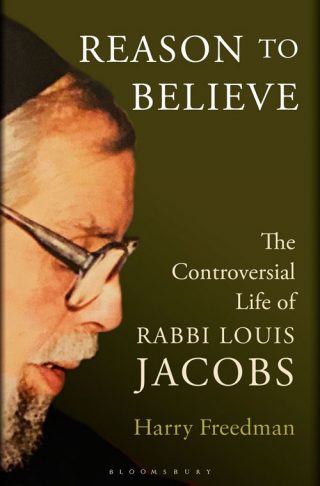
Louis Jacobs was born 100 years ago this year. He remains the greatest intellect and most accomplished scholar British Jewry has ever produced. He wrote dozens of books and hundreds of articles, on Theology, Talmud, Halacha, Kabbalah, Hasidism, Prayer and Jewish life. But times change and even the greatest characters become forgotten. I have written his biography, called Reason to Believe, so that those who do not remember him can gain some appreciation of his scholarship, his outlook and his significance, not just to future generations of Masorti communities but to the whole of British Jewry.

This article was posted on the website of Masorti Judaism on November 2nd 2020 to mark the forthcoming publication of my book: Reason to Believe: The Controversial Life of Rabbi Louis Jacobs.

Rehabilitating Aaron

Rehabilitating Aaron

The ceremony to induct Aaron and his sons into the priesthood worried the expositors of the Midrash. It was Aaron who had made the Golden Calf, the worst of all the offences committed by the Israelites in the wilderness. Even though he was Moses’s brother, and stood alongside him in the confrontation with Pharaoh, to give him the high priesthood after such an event seemed wholly inappropriate. It looked, heaven forfend, like nepotism: Moses giving the most important job, after his own, to his brother.

Continue reading
When a Soul Sins

When a Soul Sins

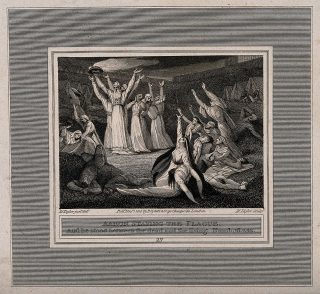
In biblical Hebrew the word nefesh, which we usually translate as ‘soul’, is often used to mean ‘somebody’ or ‘a person’.
The midrash illustrates the point it wants to make with a well known parable, about a king who appoints two watchmen to guard his orchard. One is blind and the other lame. The king warns them not to steal the fruit in the orchard.

Continue reading
© 2026 Harry Freedman Books