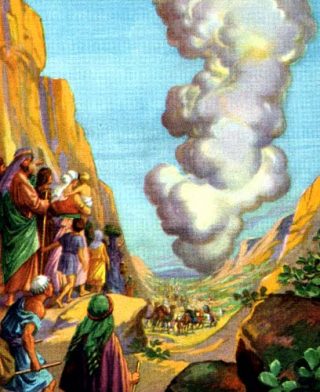
When the cloud rose from the tabernacle the Israelites would set out; and at the place where the cloud settled, there the Israelites would make camp.
It’s well known that, as the Israelites journeyed through the wilderness, they were guided by a pillar of fire by day and a pillar of fire by night. The pillar stopped when it was time to make camp, moving off when it was time to get going again. When they camped the cloud rested atop the sacred tabernacle. The only time it deviated from this pattern was right at the beginning, at the Red Sea, placing itself between the Israelites and the Egyptians to obscure Pharaoh’s view of his quarry. God looked through it at the Egyptian camp before bringing disaster upon them. (Exodus 14, 24).
That is all know about the pillar of cloud and that of fire. It’s a little surprising, given their miraculous nature. After all, nearly every other miracle wrought for the Israelites in the desert is described in detail. We know what the manna looked like and how it tasted, we know the how the quails arrived, how the Red Sea was divided, and the manner in which the water-gushing rock was split. But, other than the drama at the Red Sea, the pillars of fire and cloud are treated in such a matter of fact way that we almost take them for granted. They are not mentioned in the dayyenu hymn, which lists many of the other miracles that happened to the Israelites. Nor is there significant mention of them anywhere else in the Bible, there are just three passing references in the Book of Psalms.
Continue reading