
False Hope and Squalor on the Banks of the Tiber
How the Jews of Rome were forced back into the Ghetto
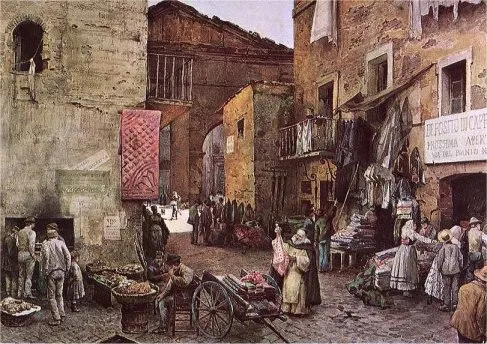
By the middle of the 16th century, many European cities had confined their Jewish population into a ghetto, a slum bounded by walls and gates in which only they were permitted to live. Cities like Frankfurt and Prague had long set aside areas where Jews were obliged to live but it was in 1516, in Venice, where the first formal ghetto was established, a prison-city which no Jew was allowed to leave at night.
The ghetto in Venice was a miserable place but the presence of so many people cloistered together in their own cultural bubble led to a remarkable creative renaissance[*]. The ghetto in Rome, the second of 41 to be established in Italy, was very different. Sited on the banks of the River Tiber, it was a truly unhappy place. Rome’s ghetto was established in 1555 by Pope Paul IV as the most severe of several discriminatory measures that included a ban on Jews owning property, trading in foodstuffs and employing Christians. Jewish doctors were forbidden to treat Christian patients and Christians were not allowed to greet Jews using a courtesy title like signor or signora. The Pope, who had been the driving force behind the public burning of the Talmud in Rome two years earlier, issued his decree in a papal bull entitled cum nimis absurdum. The name means ‘just as it is absurd’ and is taken from the opening words of the bull which declares it absurd that Jews, “whose own guilt has condemned them to perpetual servitude” should live side-by-side with Christians and have equal rights. Read more at https://harryfreedman.substack.com/p/false-hope-and-squalor-on-the-banks
0 Comments